Scarpa was founded in 1900 in Nizza, in the heart of Monferrato, but its roots have always reached into the Langhe as well. Since 2018, with the acquisition of vineyards in three important MGAs – Monvigliero in Verduno, Roncaglie in La Morra and Canova in Neive – that historic connection has become an ambitious, long-term project. We spoke with Davide Champion, CEO of Scarpa, in a conversation spanning history, territory and future vision.
Davide, Scarpa is historically tied to Monferrato. How has your relationship with the Langhe evolved?
Scarpa was founded in 1900 in Nizza, at the heart of Monferrato, but our roots also extend into the Langhe. Our wines have always told that story: our first Barolo vintage dates back to 1940, and our first Barbaresco to 1974. We vinify Nebbiolo for Barolo and Barbaresco in Nizza Monferrato thanks to an exemption granted under the production regulations, recognising that we were among the historic producers making these wines long before the current rules came into force.
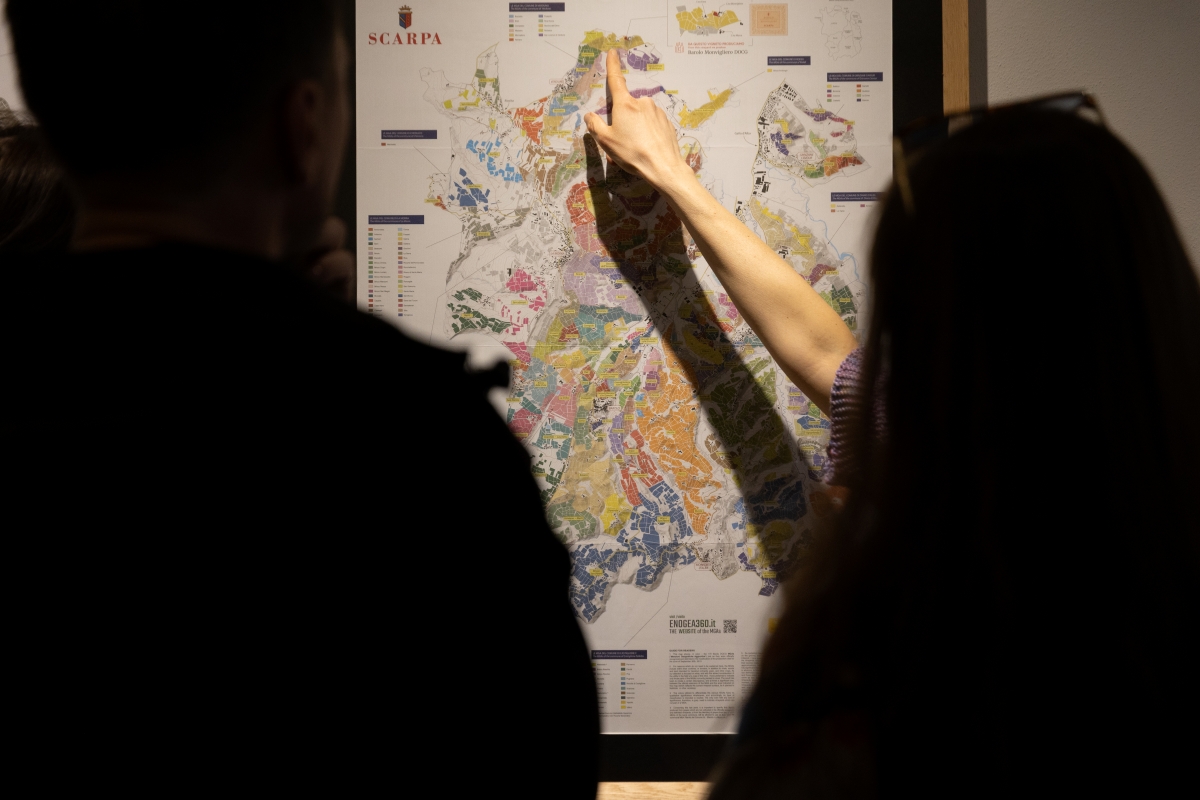
Our origins and our bond with Monferrato remain essential, as do the varietal wines we have always represented. But Scarpa is also Langhe. Since 2018, with the acquisition of vineyards in three MGAs – Monvigliero, Roncaglie and Canova – we have turned that long-standing connection into a project with a long horizon, one that looks to the decades ahead.
Scarpa has always been a pioneer, from Barbera to Nebbiolo. How does this Langhe project fit into your history?
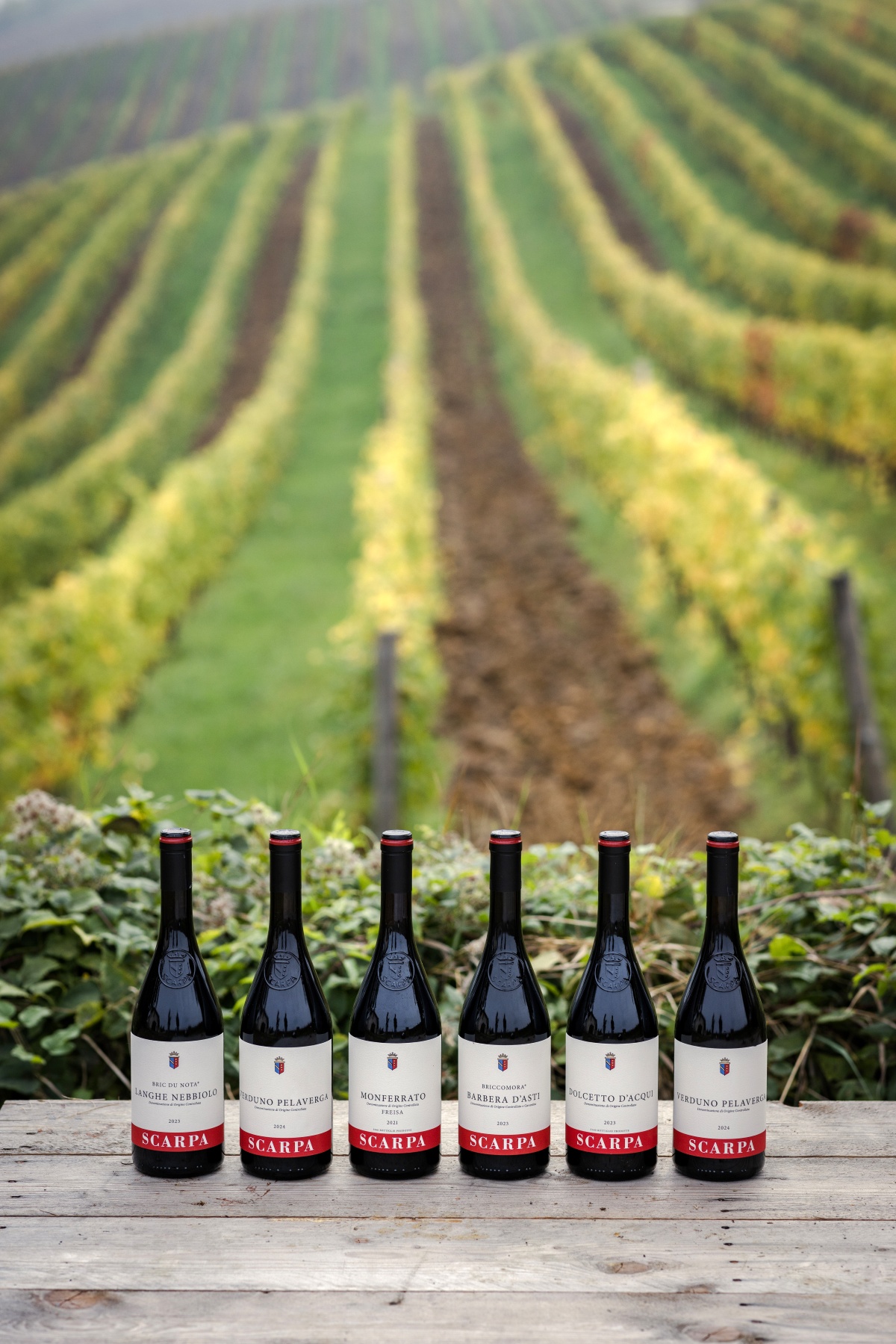
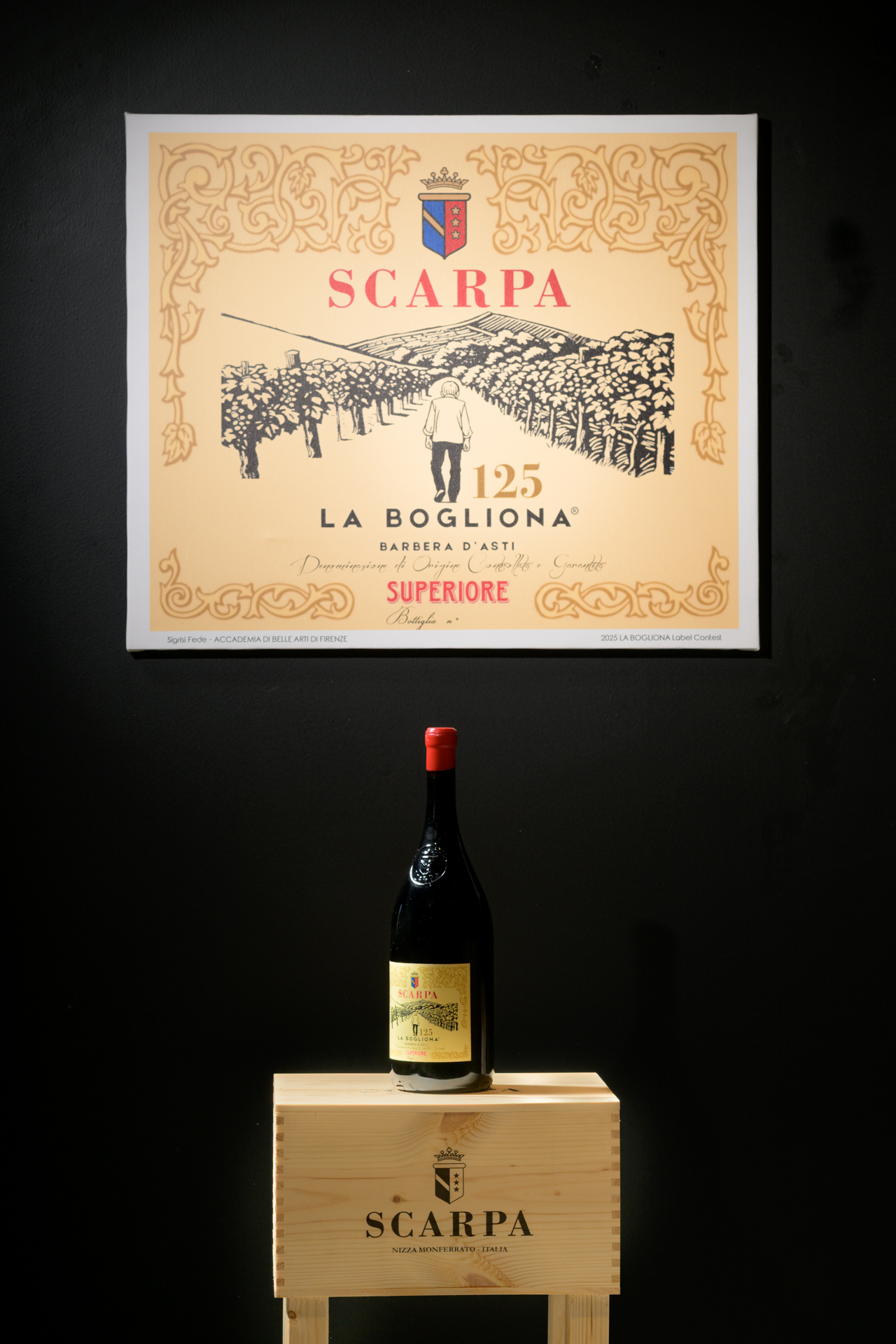
Scarpa has always been a pioneering winery in everything it has done. We did it with Barbera, believing deeply in this great variety – and La Bogliona, which we consider our highest expression of Barbera, continues to prove that every day.
With the acquisition of vineyards in the Langhe, we are applying the same philosophy to Nebbiolo: believing in long-term potential, investing in historic crus, and working with patience and respect for the territory. This journey in the Langhe fits naturally into our history because it has always been part of our identity – today, we simply cultivate it directly, with the same dedication we have always given to our historic varieties. It is undoubtedly an ambitious challenge, but one we face openly, confident in the strong identity and potential of these vineyards and wines.
Let’s talk about the three MGAs. Starting with Monvigliero: what drew you to this cru?
We had the opportunity to acquire vineyards in Verduno, within the Monvigliero cru, a site we care about deeply. We felt connected to it from the very beginning. Monvigliero is one of Verduno’s most renowned MGAs, in an area that sits right on the border between Barolo and Barbaresco and is known for marl-rich soils that give the wines elegance, finesse and remarkable ageing potential.
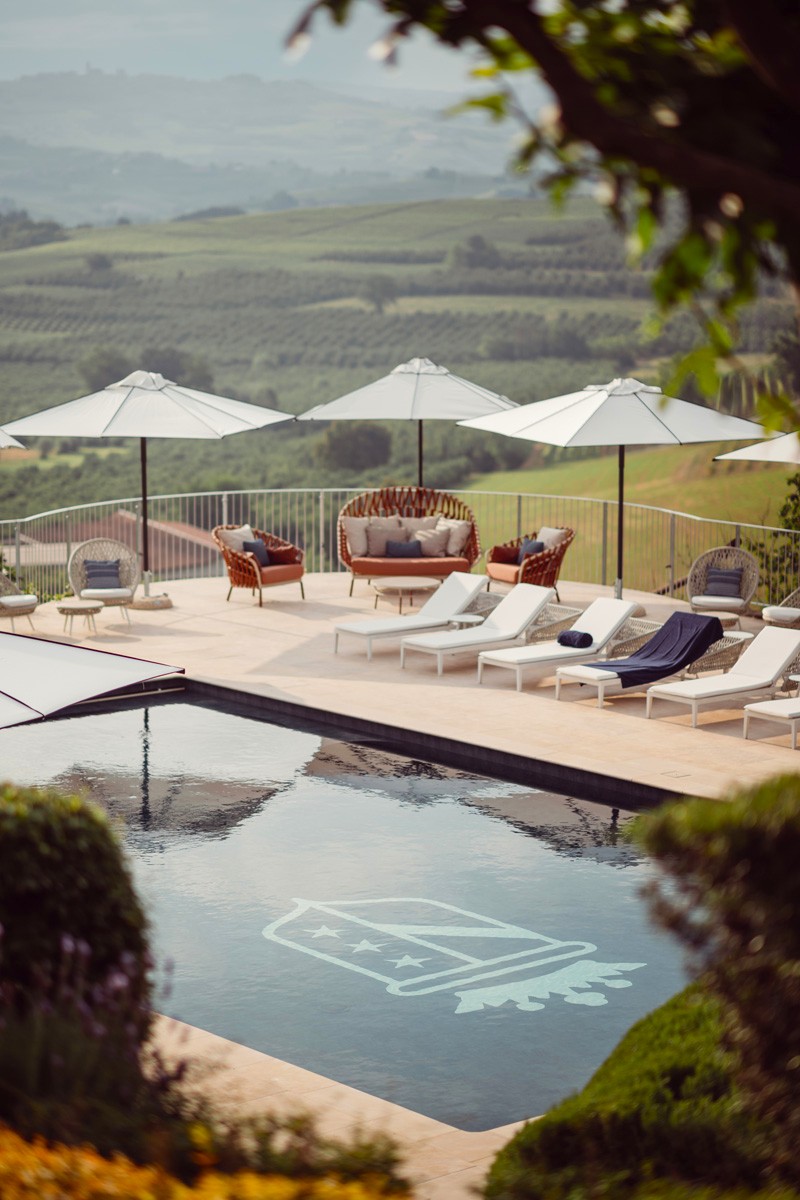
We are also fortunate to offer hospitality right at the foot of our vineyard, at the beautiful Scarpa Villas, which allows us to share that direct connection with the territory with our guests.
And Roncaglie in La Morra?
Our connection to Roncaglie, in La Morra, feels essential, not least because Carlo tells us that in 1978 Scarpa produced a Barolo “Cascina Roncaglia” from this very site. That means a great deal to us: it feels like coming home after a long time.
La Morra is the largest commune in the Barolo area, with gentle hills and calcareous-marl soils that give wines of great harmony and elegance. Roncaglie, in particular, is a beautifully exposed MGA that produces Barolo of great finesse and aromatic depth.
Finally, Canova in Neive. A less celebrated but equally important area, correct?
Completing this journey are our vineyards in Canova, in Neive – an MGA that few producers, like us, choose to indicate on the label. Neive is one of the historic communes of Barbaresco, and Canova is an MGA of real character, with calcareous marl soils that bring structure and longevity.
It is a territory that deserves more attention than it receives today, and for us it is a source of pride to enhance it and tell its story through our wines.
What does it mean for Scarpa to work with this kind of long-term vision?
It means respecting the time that is needed. As producers, we feel a responsibility to look far ahead – the land, and wines made for long ageing, require patience, care and the ability to see beyond the present. We never forget our origins in Monferrato, but at the same time we look to the Langhe with the same dedication, the same respect and the same desire to tell the story of territory and identity.
Our journey has only just begun, but we know where we want to go.