Our journey through Scarpa’s varietal wines and Piedmont’s ampelographic heritage continues. After Nebbiolo, Freisa, Barbera and Ruchè, we turn to five more varieties, each rooted in a distinct geography and a story closely bound to the region’s wine culture.
Dolcetto, Pelaverga, Brachetto, Timorasso and Moscato together trace a varied landscape, from the Langhe to Monferrato. By growing and vinifying each variety on its own, Scarpa continues the research begun at Poderi Bricchi in the 1970s: understanding the character of each grape and identifying the conditions in which it can best express itself.
Dolcetto: part of everyday life in Piedmont
For centuries, Dolcetto has been part of rural life in Piedmont. One of the earliest written records dates back to 1593, when an ordinance issued in Dogliani regulated the harvest of the “Dozzetti”. Its early ripening meant that it could be picked ahead of many other Piedmontese varieties. The name itself is thought to derive from the dialect words Duset or Dosset, referring to the sweetness of the ripe berry.
In the glass, Dolcetto shows deep colour, distinctive tannins and more moderate acidity, with aromas of red and dark fruit and its characteristic almond note on the finish.
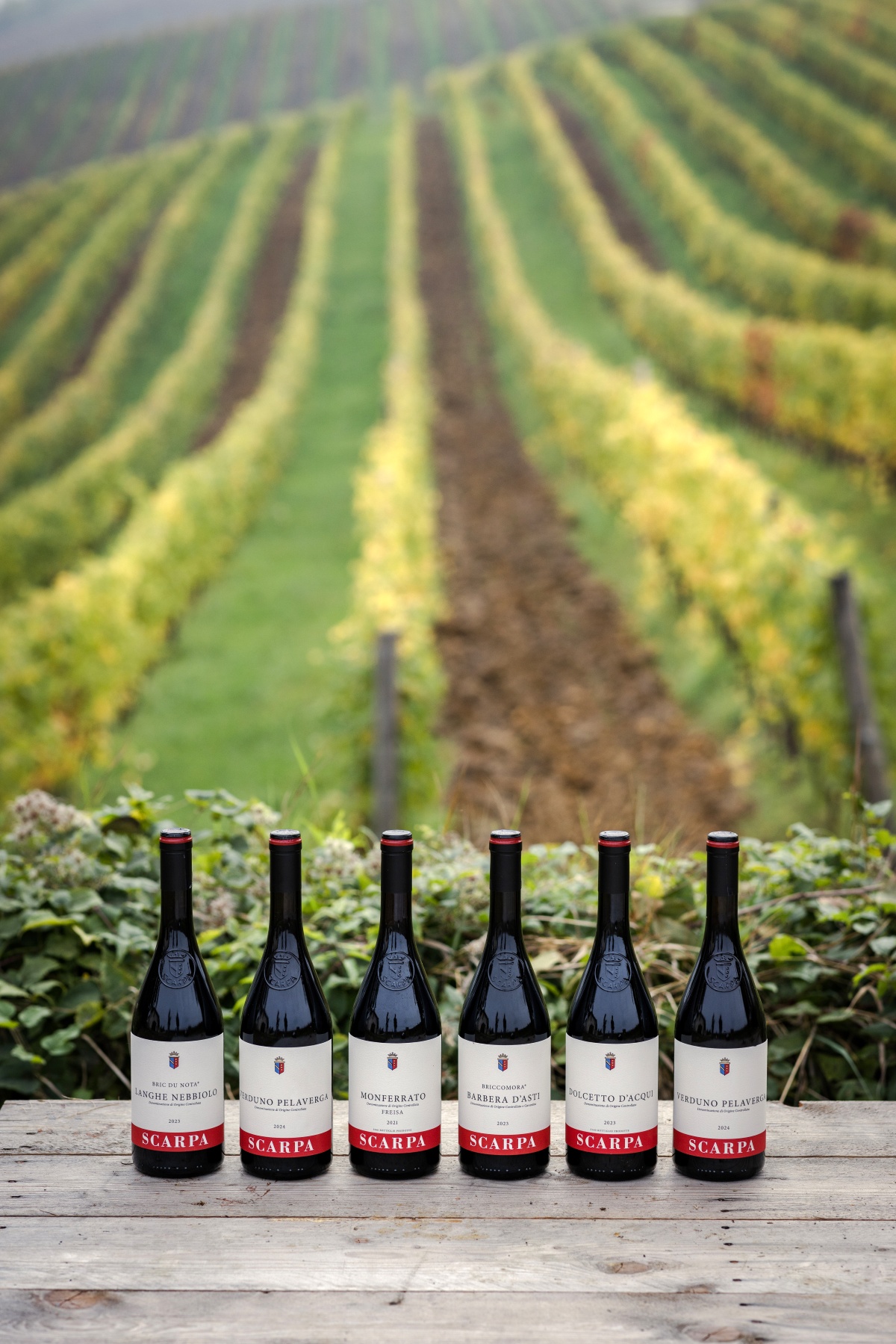
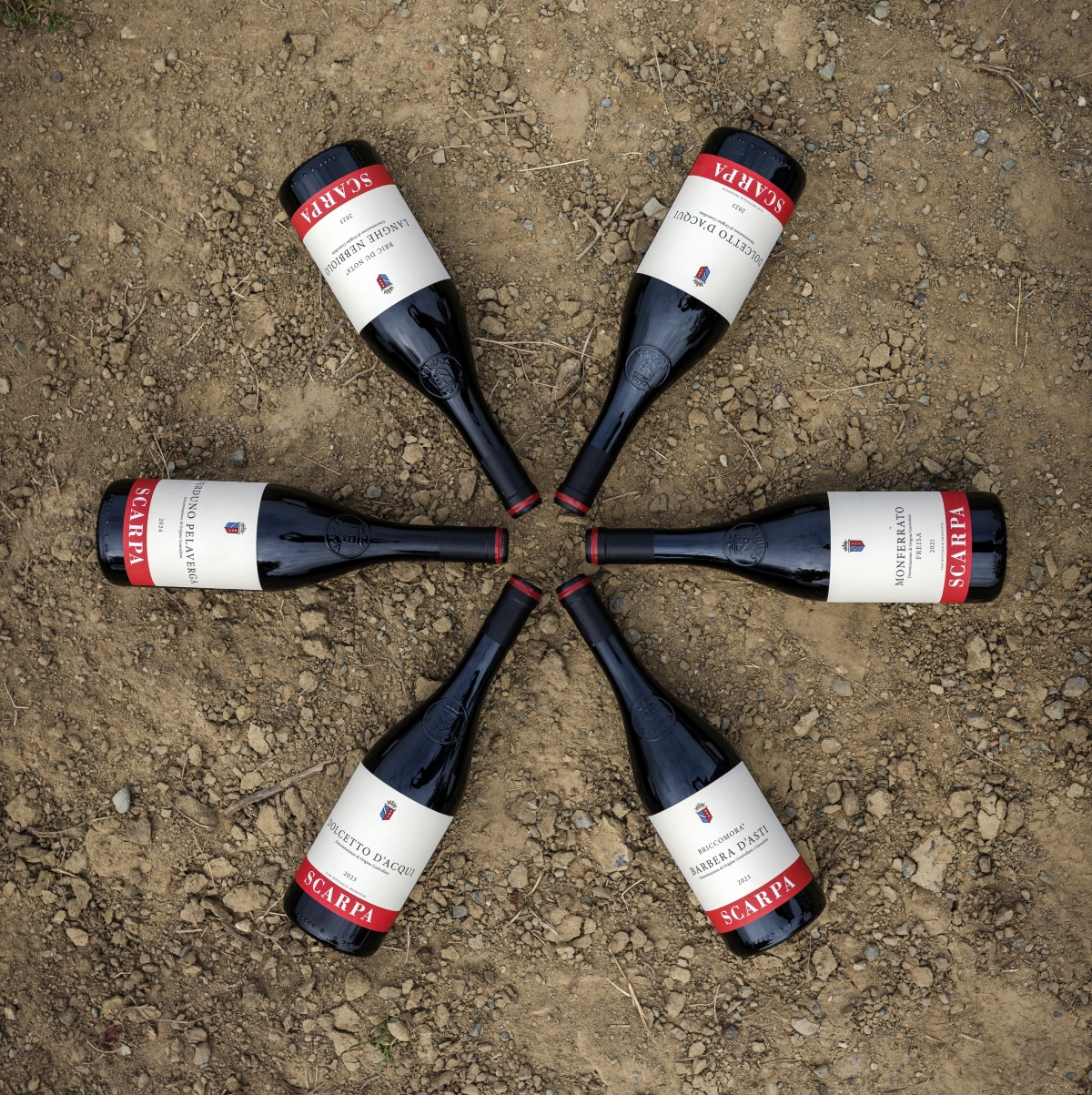
Scarpa grows Dolcetto in Acqui Terme, at 400 metres above sea level, on red, clay-rich soils. The Dolcetto d’Acqui DOC ages for twenty months in stainless steel.
Pelaverga: the spice of Verduno
The Pelaverga Piccolo has a remarkably small geographical footprint, centred around Verduno and extending into parts of La Morra and Roddi. For many years it was confused with the Pelaverga grown in Val Bronda, until ampelographic studies established that they were two distinct varieties. Verduno Pelaverga was granted DOC status in 1995.
Ripening towards the end of September, it produces wines with a delicate ruby colour, light tannins and lively acidity. Strawberry and small red berries define its youthful profile, while spice is its most distinctive hallmark – linked in part to rotundone, the compound associated with peppery aromas.
Scarpa grows Pelaverga at Monvigliero, at around 350 metres above sea level, on loose soils rich in limestone and sand.
Brachetto: the tradition of dry winemaking
Brachetto has long been part of the wine culture of south-eastern Piedmont. In 1834, Giorgio Gallesio recorded its presence in the areas around Asti and Alessandria. Its grapes are naturally aromatic, with floral scents – particularly rose – already clearly present in the fruit.
Today, Brachetto is best known for its sweet and sparkling expressions; dry winemaking is also firmly rooted in the region’s tradition. It became particularly widespread in the early decades of the twentieth century, when dry Brachetto was also enjoyed with meals.
Scarpa continues this tradition with its Brachetto d’Acqui DOCG Secco, produced from a 0.9-hectare parcel at Poderi Bricchi. Here, white soils with sandy streaks give rise to a wine in which rose and citrus are joined by spicy notes.
Timorasso: the return of an ancient Piedmontese white
The story of Timorasso spans almost two centuries of Piedmontese viticulture. Giorgio Gallesio wrote of the variety in the countryside around Novi Ligure as early as 1834. Just a few decades later, it accounted for a significant share of the white grapes grown in the Tortona area, and by the end of the century its fermenting musts were being sent to Lombardy, Switzerland and Germany. During the twentieth century, plantings dwindled to just a few hectares, before the recovery efforts of recent decades brought Timorasso back to prominence.
The variety retains good acidity and, as it ages, develops aromas of ripe fruit and saffron, together with a natural capacity for long ageing.
At Poderi Bricchi, Timorasso grows on an east-facing parcel of clay soil. Scarpa vinifies it in stainless steel with bâtonnage periodically for nine months, followed by twenty-four months of bottle ageing.
Moscato: Piedmont’s historic aromatic variety
Moscato Bianco holds a central place in Piedmont’s wine history. Its cultivation connects the areas of Asti, Alessandria and Cuneo with a tradition that also played an important role in the development of Italian sparkling wine. In 1865, Carlo Gancia applied the techniques he had learned in Champagne to Moscato. By the end of the century, Federico Martinotti had developed a method of fermentation in large pressurised tanks that would contribute to the success of Asti and Moscato d’Asti.
Moscato has an instantly recognisable aromatic profile, with notes of peach and sage alongside floral nuances. In Moscato d’Asti, winemaking is aimed at preserving this aromatic character while balancing it with the grape’s natural freshness.
Scarpa grows Moscato at Poderi Bricchi, on predominantly clay and sandy parcels, from which the estate’s Moscato d’Asti DOCG is produced.